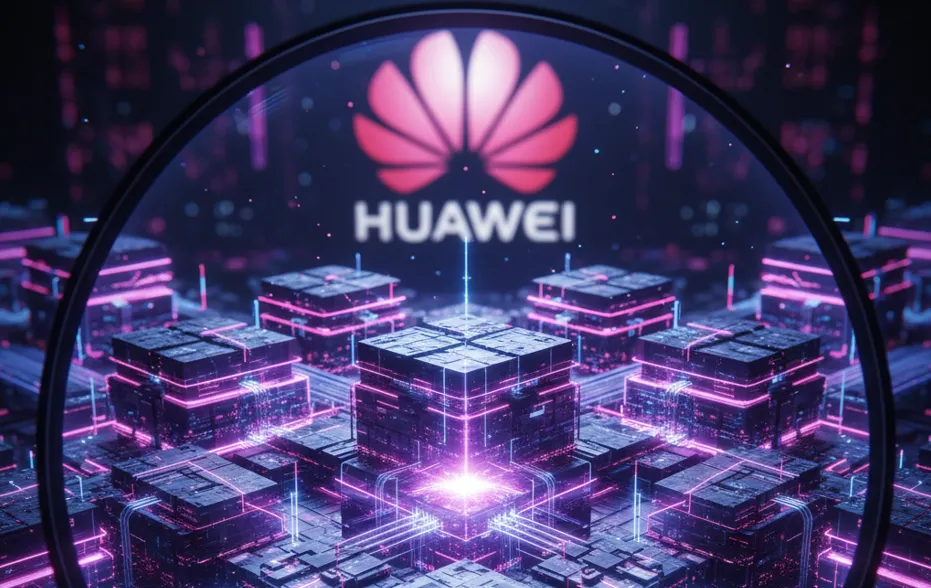
Huawei Reveals the World’s Most Powerful SuperPoDs and SuperClusters Add to favorites
Last update time : 2025-09-24 11:58:50
At Huawei Connect 2025, Huawei unveiled its latest SuperPoD and SuperCluster systems based on Ascend NPUs, aiming to dramatically enhance AI computing infrastructure.
At Huawei Connect 2025, Huawei introduced its most powerful versions of SuperPoD and SuperCluster technologies.
Among the new models are the Atlas 950 SuperPoD (8,192 Ascend NPUs) and Atlas 960 SuperPoD (15,488 Ascend NPUs).
Huawei also announced the Atlas 950 and 960 SuperClusters, which are composed of multiple SuperPoDs. They deliver roughly 500,000 and 1,000,000 Ascend NPUs, respectively.
The SuperPoD architecture aims to function as a single logical machine built from multiple physical units, enabling unified learning, thinking, and reasoning across the system.
Key ambitions include industry-leading metrics in memory capacity, NPU count, and interconnect bandwidth. They also unveiled a new protocol, UnifiedBus 2.0, to improve long-distance connectivity and lower latency in AI infrastructure.
Tags : Huawei SuperPoD SuperCluster Ascend NPU AI infrastructure UnifiedBus 2.0 computing power technological leadership
Technology News
Samsung Unleashes Robotics Revolution
How AI Is Consuming the World's Memory Supply
AMD Unveils Ryzen 7 9850X3D
AI Warning: Risk of a Bubble if it's Not Sustainable
SpaceX Bolsters Global Connectivity with Successful Deployment of 29 New Starlink Satellites
Artificial intelligence has landed in the physical world in Las Vegas
AI's Insatiable Data Center Demand Triggers Global Memory Shortage: Prices Set to Surge Through 2026
Navigating the Era of Imperative AI
CES 2026: AI Integration to Take Center Stage in Las Vegas
President Trump Establishes Federal AI Framework, Overriding State Regulations
The range of electric vehicles will increase by 30%!
xAI Unleashes 'Grok Voice 2.0': Next-Gen AI Audio Shatters Latency and Realism Records
AI Tools
- Aggregators
- AI Detection
- Automation & Agents
- Avatar Creators
- Chatbots
- Copywriting
- Finance
- For fun
- Games
- Generative Art
- Generative Code
- Generative Video
- Image Improvement
- Inspiration
- Marketing
- Motion Capture
- Music
- Personal Development
- Podcast
- Productivity
- Prompt Guides
- Research
- Social Media
- Speech to Text
- Text to Speech
- Text to Video
- Translation
- Video Editing
- Visual Scanning & Analysis
- Voice Modulation